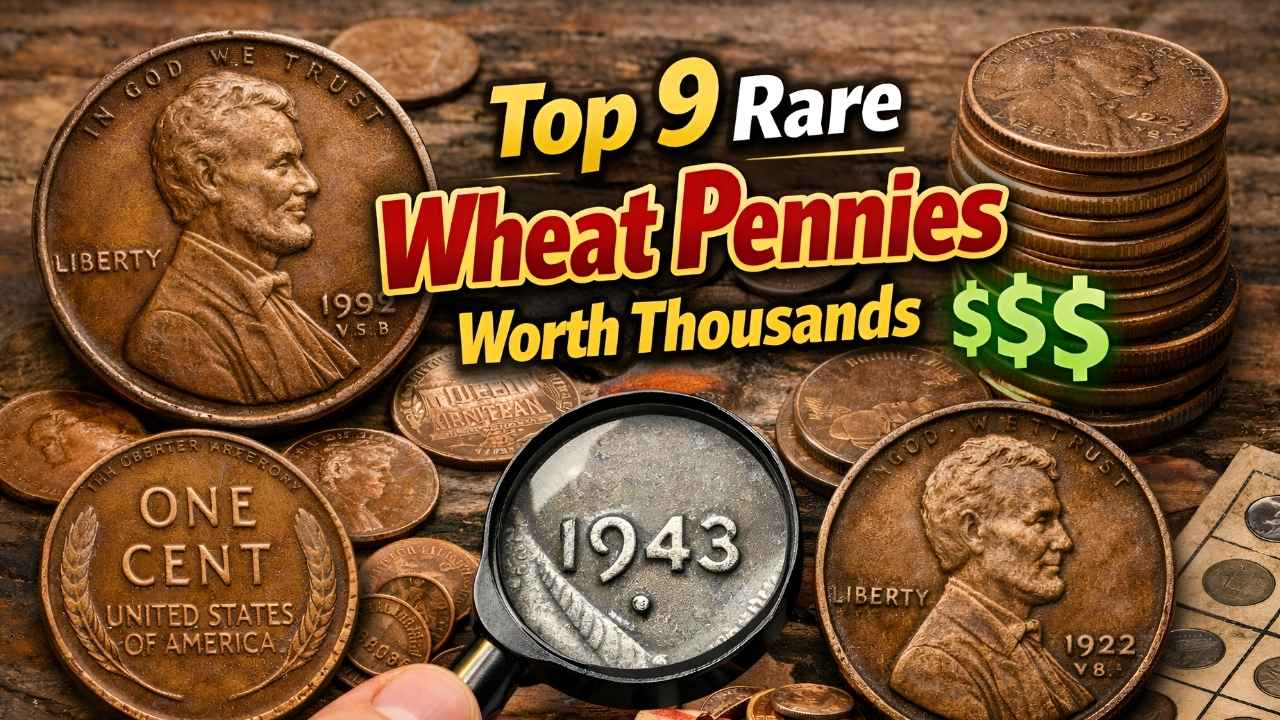
Top 9 Rare Wheat Pennies Worth Thousands: Wheat pennies are among the most beloved coins in American history. Minted from 1909 to 1958, these small copper coins feature Abraham Lincoln on the front and two wheat stalks on the back. While millions were produced, a small number of wheat pennies are incredibly rare and valuable. Some are worth hundreds, others thousands, and a few even more. What makes them exciting is that they still turn up in pocket change, old jars, and inherited collections.
Why Wheat Pennies Can Be Worth Thousands
Not every wheat penny is valuable, but certain ones stand out due to rarity, errors, or historical significance. Low mintages, unusual metal compositions, and minting mistakes can push values sky high. Condition also plays a huge role, as well preserved coins are far harder to find than worn ones. When scarcity and collector demand meet, prices rise fast.
1909 S VDB Wheat Penny
The 1909 S VDB wheat penny is the most famous coin in the series. It was the first Lincoln cent ever issued and featured the designer’s initials VDB on the reverse. Public criticism led to the initials being removed shortly after release. With a very low mintage from the San Francisco mint, this coin is extremely desirable and can be worth thousands even in worn condition.
1914 D Wheat Penny
The 1914 D wheat penny is another major key date. Produced in Denver with a low mintage, many were heavily circulated. Finding one today in high grade is extremely difficult. Because of its scarcity and popularity, this coin is often counterfeited, making authentic examples especially valuable.
1922 No D Wheat Penny
The 1922 No D wheat penny is a fascinating error coin. That year, cents were only supposed to be struck in Denver, meaning all should have a D mintmark. However, worn dies caused some coins to lose the mintmark completely. True examples with no trace of the D are rare and can command very high prices.
1931 S Wheat Penny
The 1931 S wheat penny was produced during the Great Depression, when coin demand was low. As a result, far fewer were minted than usual. Many people saved them at the time, but high quality examples remain scarce. This coin is a key date for collectors trying to complete a full wheat penny set.
1943 Copper Wheat Penny
The 1943 copper wheat penny is one of the most legendary error coins in American numismatics. During World War Two, pennies were supposed to be made of steel to save copper for the war effort. A small number were accidentally struck on leftover copper planchets. These coins are extremely rare and worth tens or even hundreds of thousands of dollars.
1944 Steel Wheat Penny
The opposite of the 1943 copper error, the 1944 steel wheat penny was mistakenly struck after the mint returned to copper. Only a few genuine examples exist. Because steel pennies are easy to fake, authentication is critical. Real examples are worth a fortune and highly sought after by elite collectors.

1955 Doubled Die Wheat Penny
The 1955 doubled die wheat penny is famous for its dramatic doubling. The date and lettering appear clearly doubled, making the error easy to see without magnification. Many entered circulation before the mistake was caught. Today, this coin remains one of the most popular and valuable error pennies ever made.
1958 Doubled Die Wheat Penny
The 1958 doubled die wheat penny is much rarer than the 1955 version. Doubling is visible on the lettering and date, but far fewer examples exist. Because 1958 was the final year of wheat penny production, this error holds extra appeal and can sell for thousands.
How to Identify Valuable Wheat Pennies
To identify rare wheat pennies, start by checking the date and mintmark. Look closely for errors such as doubling, missing mintmarks, or unusual color and weight. A magnifying glass helps reveal small details. Comparing your coin to verified examples is also important, especially for high value varieties.
The Role of Coin Condition in Value
Condition greatly affects value. A worn but rare wheat penny can still be valuable, but coins with sharp details, original surfaces, and minimal wear are worth much more. Cleaning a coin can damage its surface and lower its value significantly. It is best to leave coins exactly as they are found.
Where Wheat Pennies Are Still Found
Wheat pennies are often discovered in old collections, family inheritances, and forgotten storage boxes. Coin roll hunting at banks also turns up wheat pennies occasionally. Some people still find them in everyday change, especially in older areas where coins circulate longer.
Common Mistakes Collectors Should Avoid
Many beginners assume all wheat pennies are valuable, which is not true. Most common dates are worth only a small premium. Another mistake is cleaning coins or selling without research. Learning key dates and varieties helps avoid disappointment and missed opportunities.
Should You Get Wheat Pennies Professionally Graded
Professional grading is recommended for rare or high value wheat pennies. Authentication confirms that the coin is genuine and not altered or counterfeit. Graded coins are easier to sell and often bring higher prices. This step is especially important for coins worth thousands.
Why Wheat Pennies Remain Popular with Collectors
Wheat pennies combine history, affordability, and the thrill of discovery. They are easy to recognize and tell a story of early twentieth century America. Even new collectors can participate, making the series one of the most enduring in coin collecting.

Final Thoughts on Hidden Wheat Penny Treasures
Rare wheat pennies prove that valuable coins can still be hiding in plain sight. With patience, knowledge, and careful inspection, collectors can uncover treasures worth thousands. Whether found in pocket change or passed down through generations, these coins continue to reward those who know what to look for.