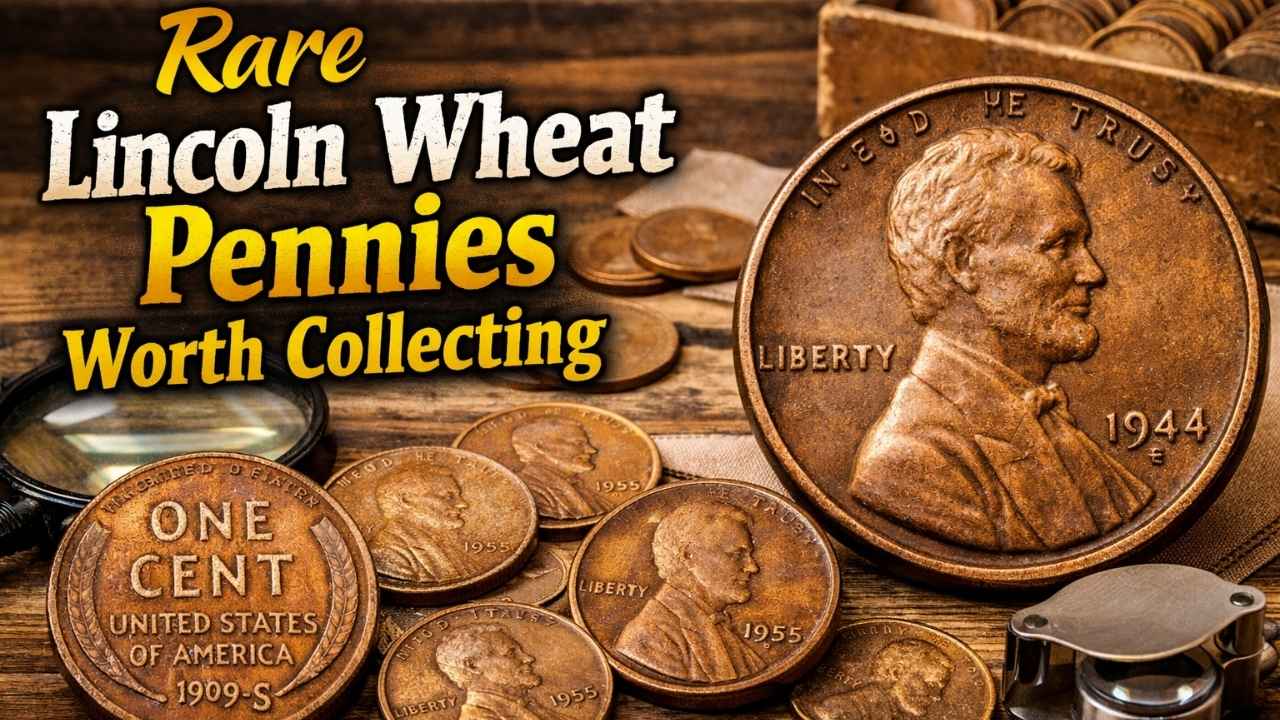
Rare Lincoln Wheat Pennies Worth Collecting: The Lincoln Wheat Penny was first minted in 1909 to honor the centennial of Abraham Lincoln’s birth. It was the first regular-issue U.S. coin to feature a real person, breaking from the tradition of allegorical figures. Designed by Victor David Brenner, the coin’s obverse shows Lincoln’s portrait, while the reverse features two wheat stalks framing the denomination. This design remained in use until 1958, when it was replaced by the Lincoln Memorial reverse.
The Wheat Penny quickly became a symbol of American heritage. Its widespread circulation and iconic design made it a favorite among collectors, both casual and serious.
Minting History and Varieties
The Wheat Penny was struck at three primary mints:
- Philadelphia (no mint mark)
- Denver (D mint mark)
- San Francisco (S mint mark)
Over the years, several varieties and errors emerged, adding depth to the series. Collectors distinguish between common circulation strikes, proof issues, and rare varieties such as doubled dies and overdates.

The Collector Market in 2026
By 2026, the Lincoln Wheat Penny remains one of the most collected coins in American numismatics. Its long history, iconic design, and range of rarities make it appealing to both beginners and seasoned collectors. While many Wheat Pennies are worth only a few cents above face value, certain rare dates and varieties can command thousands or even millions of dollars.
The market has been energized by record-breaking auction sales, with rare examples fetching extraordinary sums. This has drawn renewed attention to the series and inspired collectors to search for hidden treasures in their own collections.
Rare and Valuable Wheat Pennies
Several Wheat Pennies stand out as particularly valuable:
- 1909-S VDB: The most famous rarity, with limited mintage and distinctive initials.
- 1914-D: Scarce in high grades, highly sought after.
- 1922 No D: A Denver issue missing its mint mark, extremely rare.
- 1931-S: Low mintage, prized by collectors.
- 1943 Copper Penny: A legendary rarity, struck in copper instead of steel, worth millions.
- 1955 Double Die Obverse: Famous for its dramatic doubling, a collector favorite.
These coins represent the pinnacle of Wheat Penny collecting, combining rarity, historical significance, and high value.
Grading and Condition
Grading plays a crucial role in determining value. Coins are assessed on the Sheldon scale, ranging from Poor (P-1) to Mint State (MS-70). Proof coins are graded separately, with PR-70 representing flawless examples.
- Circulated coins: Show wear, typically worth modest premiums unless rare.
- Uncirculated coins: Retain original luster, more valuable.
- Proof coins: Struck with mirror-like surfaces, highly prized.
Certification by professional grading services adds credibility and can significantly increase resale value.
Value Chart for 2026
Here is a practical guide to typical values for rare Lincoln Wheat Pennies in 2026. Prices vary depending on condition and certification, but this chart offers a benchmark for collectors.
| Rare Lincoln Wheat Penny | Condition | Typical Value (2026) |
|---|---|---|
| 1909-S VDB | Fine | $700–$1,200 |
| 1909-S VDB | Mint State 65 | $2,500–$4,500 |
| 1914-D | Fine | $150–$300 |
| 1914-D | Mint State 65 | $3,000–$6,000 |
| 1922 No D | Fine | $500–$1,000 |
| 1922 No D | Mint State 65 | $10,000–$20,000 |
| 1931-S | Fine | $75–$150 |
| 1931-S | Mint State 65 | $500–$1,000 |
| 1943 Copper Penny | Any grade | $250,000–$1,500,000+ |
| 1955 Double Die Obverse | Fine | $1,000–$2,000 |
| 1955 Double Die Obverse | Mint State 65 | $15,000–$30,000 |
Investment Potential
The Lincoln Wheat Penny offers both sentimental and financial value. Common dates provide affordable entry points for beginners, while rare varieties represent true investment opportunities. Silver and copper content adds intrinsic value to certain issues, while legendary rarities like the 1943 Copper Penny offer extraordinary potential.
The series has proven resilient in the collector market, with steady demand across generations. As of 2026, interest remains strong, making Wheat Pennies a worthwhile addition to any collection.
Tips for Collectors
For those interested in building a Wheat Penny collection, consider the following strategies:
- Focus on key dates and rare varieties for long-term value.
- Seek high-grade examples, especially Mint State coins.
- Hunt for famous errors such as the 1955 Double Die.
- Consider certification to enhance credibility and resale potential.
- Build complete sets to appreciate the series’ historical progression.
Cultural Significance
Beyond monetary value, the Lincoln Wheat Penny holds cultural importance. It represents a tribute to Abraham Lincoln, one of America’s most revered presidents. Its design reflects themes of agriculture, heritage, and resilience, resonating with generations of Americans.
The enduring popularity of the Wheat Penny demonstrates how numismatics can preserve history and connect people across time. It remains a tangible reminder of Lincoln’s legacy and the nation’s journey.
Conclusion
The Lincoln Wheat Penny is more than a coin. It is a piece of history, a tribute to Abraham Lincoln, and a collectible that continues to inspire. In 2026, it remains one of the most popular coins in American numismatics, offering opportunities for collectors and investors alike.
From common circulation strikes to rare varieties and record-breaking auction sales, the Wheat Penny embodies the richness of coin collecting. Whether you are drawn to its historical significance, its artistic design, or its potential value, this coin offers something for everyone.