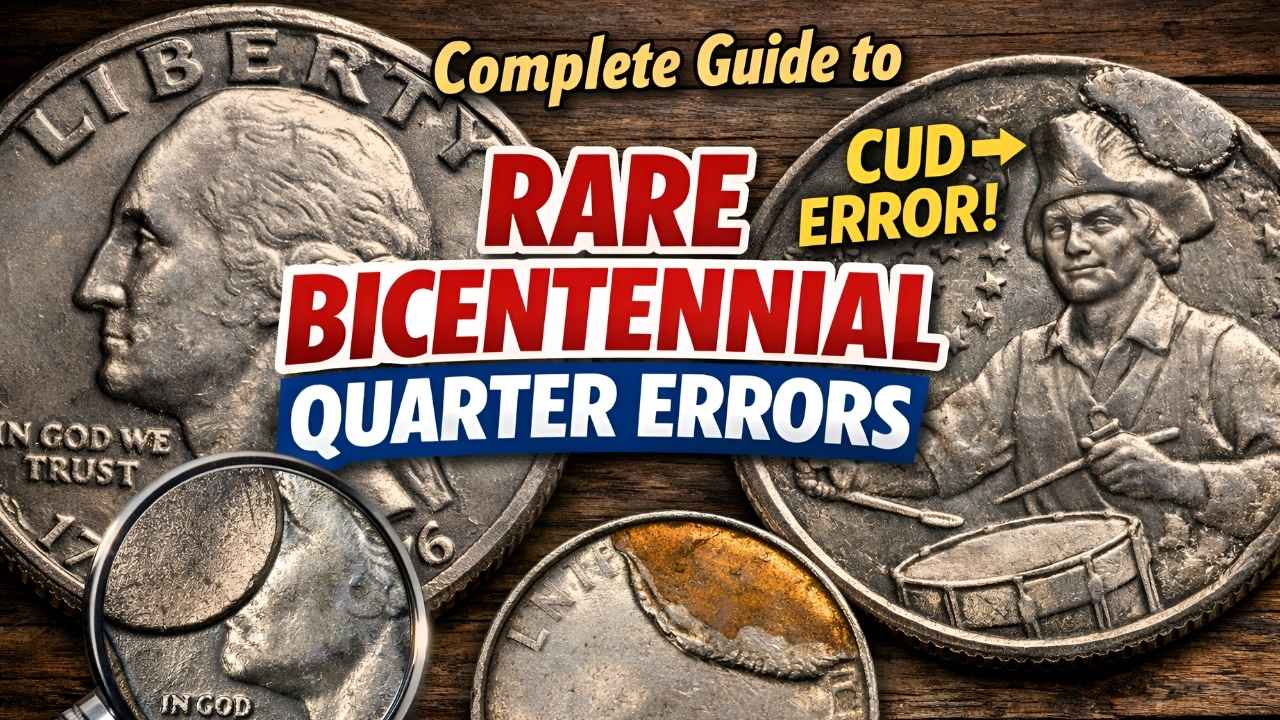
Complete Guide to Rare Bicentennial Quarter Errors: The Bicentennial quarter is one of the most recognizable coins in American history. Issued to celebrate the 200th anniversary of the United States, these quarters were minted with the dual date 1776 1976 and a special reverse design featuring a colonial drummer. Millions were produced, and they are still commonly found today. While most Bicentennial quarters are only worth face value, some rare errors and special varieties are highly valuable and sought after by collectors.
Why Bicentennial Quarter Errors Matter
Errors add excitement and rarity to coin collecting. Since Bicentennial quarters were produced in massive numbers, any unusual mistake that slipped through quality control becomes instantly desirable. These errors were never intended for circulation, making them unique pieces of history. The more visible and dramatic the error, the higher the potential value in the collector market.
Overview of Bicentennial Quarter Production
Bicentennial quarters were struck at three mints. Philadelphia produced coins without a mintmark, Denver used a D mintmark, and San Francisco struck both proof and special silver versions. While most were made of copper nickel, some San Francisco issues contained 40 percent silver. Understanding where and how these coins were made helps collectors identify which ones are worth a closer look.
Doubled Die Obverse Bicentennial Quarters
One of the most popular errors is the doubled die obverse. This error causes doubling on the date, lettering, or George Washington’s profile. The doubling occurs during the die creation process, not from damage after minting. Strong examples show clear separation in the letters and numbers and can be worth hundreds or even thousands depending on condition.

Doubled Die Reverse Errors
Doubled die reverse errors are less common but equally collectible. These errors may show doubling on the drummer, lettering, or torch details. Because the Bicentennial reverse design is unique, doubling stands out clearly when present. Authentic examples are scarce and often overlooked by casual collectors.
Off Center Strike Bicentennial Quarters
Off center strikes occur when the coin blank is not properly aligned during striking. This results in part of the design missing, sometimes dramatically. Bicentennial quarters with large off center strikes that still show the full date are especially valuable. The more extreme the misalignment, the more collectors are willing to pay.
Clipped Planchet Errors
Clipped planchet errors happen when a portion of the coin blank is missing before striking. These clips can be curved or straight depending on how the metal sheet was cut. Bicentennial quarters with clearly visible clips and intact details are desirable error coins and can carry strong premiums.
Wrong Planchet Bicentennial Quarters
Wrong planchet errors are among the most exciting finds. These occur when a quarter is struck on a blank meant for another denomination or even a different metal. Bicentennial quarters struck on dime or foreign planchets are extremely rare. Weight and size differences are key indicators of these valuable errors.

Silver Bicentennial Quarters Outside Proof Sets
Some Bicentennial quarters were struck in 40 percent silver for collectors, mainly in San Francisco. Occasionally, these silver coins are found outside of proof or mint sets. Silver examples in high condition or with errors are worth significantly more than standard copper nickel versions.
Missing Clad Layer Errors
Clad coins are made of multiple metal layers. When one layer is missing, the coin appears lighter in color and weight. Bicentennial quarters missing a clad layer are rare and visually striking. These errors are popular because they are easy to identify and clearly different from normal coins.
Broadstrike Bicentennial Quarters
Broadstrike errors happen when a coin is struck without a retaining collar, causing it to spread outward. The result is a wider coin with distorted edges. Bicentennial broadstrikes with clear details and no rim damage are collectible and can be worth much more than face value.
Die Crack and Die Break Errors
As minting dies wear out, cracks and breaks can form. These flaws appear as raised lines or blobs on the coin surface. Some Bicentennial quarters show dramatic die breaks, sometimes called cud errors. Large and unusual die breaks attract strong collector interest.

Proof Error Bicentennial Quarters
Proof Bicentennial quarters were struck with specially prepared dies and polished planchets. Errors on proof coins are rare because of strict quality control. When they occur, such as doubling, off center strikes, or missing details, they are highly valuable. Proof error Bicentennial quarters are among the most desirable varieties.
How to Identify Genuine Bicentennial Errors
Identifying real errors requires careful examination. Look for consistent patterns rather than random damage. Genuine errors usually affect the design uniformly and show signs of occurring during minting. Comparing weight, size, and appearance to normal quarters can help confirm authenticity.
The Importance of Coin Condition
Condition plays a major role in value. Bicentennial error quarters with minimal wear and strong details are far more valuable than heavily circulated examples. Scratches, cleaning, and damage reduce desirability. Collectors prefer coins with original surfaces and clear error features.
Common Mistakes Collectors Make
One common mistake is confusing damage for mint errors. Bends, cuts, and post mint damage are not valuable. Another mistake is cleaning coins, which can destroy collector value. Taking time to research and verify an error can prevent costly errors.

When to Seek Professional Authentication
High value Bicentennial error quarters should be professionally authenticated. Certification confirms that the coin is genuine and properly identifies the error. Graded coins are easier to sell and usually command higher prices. This step is especially important for rare and expensive varieties.
Why Bicentennial Quarter Errors Remain Popular
Bicentennial quarters combine history, nostalgia, and collectibility. Their unique design makes errors easy to spot, and their widespread circulation increases the thrill of discovery. Collectors enjoy the challenge of finding valuable pieces among common coins.
Final Thoughts on Hidden Bicentennial Quarter Gems
Most Bicentennial quarters are worth only face value, but rare errors can be hidden in plain sight. With careful inspection, knowledge, and patience, collectors can uncover valuable treasures. These coins remind us that even modern change can hold surprising historical and financial value.