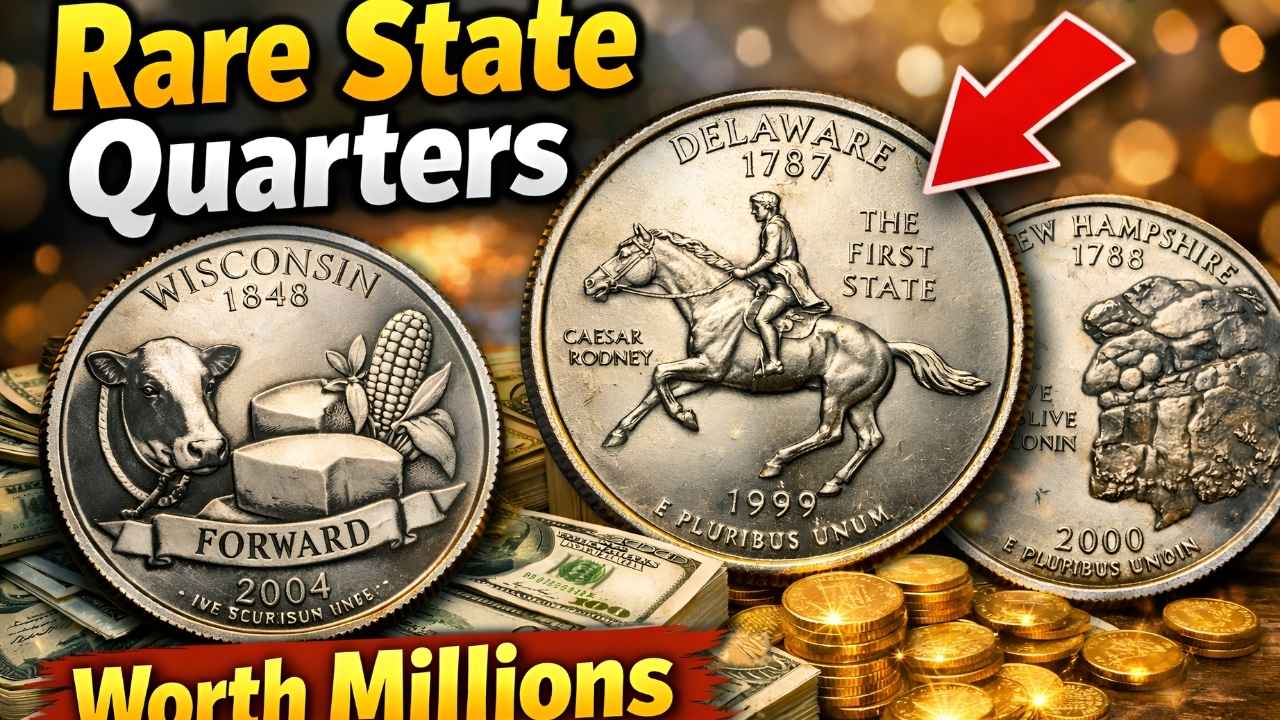
Rare State Quarters Worth Millions: State quarters have been one of the most popular series in modern U.S. coin collecting. Released between 1999 and 2008, these coins were initially intended for circulation, but today certain quarters are worth thousands or even millions of dollars. Collectors and investors are particularly interested in rare errors, low mintage coins, and coins with unusual features that make them stand out.
Despite being relatively modern, state quarters have a rich hidden history. Many coins that were once used for everyday transactions now command extraordinary premiums, especially when they are preserved in high grade or feature unusual minting errors.
The History of the State Quarters Program
The U.S. Mint launched the 50 State Quarters Program in 1999 to honor each state with a unique design on the reverse. The series ran until 2008, with five new coins released each year. The obverse features George Washington, while the reverse design reflects each state’s culture, history, or geography.
The program was highly successful, encouraging public interest in coin collecting and generating excitement among young collectors. Although millions of state quarters were minted, a few are considered ultra rare due to errors, low mintages, or collector demand.
Why Some State Quarters Are Worth Millions
The value of state quarters depends on several factors. First, rarity is critical. Certain coins had limited mintages or survived in very small numbers in uncirculated condition. Second, minting errors such as doubled dies, off-center strikes, and missing inscriptions make coins highly desirable. Third, exceptional condition plays a significant role, especially for coins graded MS67 or higher.

Collectors are also drawn to coins with historical or cultural significance. Quarters representing events, states with fewer minted coins, or unique production features often attract higher prices. The combination of these factors can result in a modern coin being worth millions.
Common Types of Valuable State Quarter Errors
State quarters are particularly known for minting errors, which are often the key to their value. Common errors include doubled dies, where design elements appear twice due to misalignment of the die, and off-center strikes, where part of the coin design is missing.
Other notable errors include missing or doubled mint marks, die cracks, and planchet errors where the coin is struck on the wrong metal or incomplete planchet. Coins with these errors are extremely rare, making them some of the most sought-after items in the series.
Rare State Quarters from Low Mintage Years
Certain state quarters were produced in smaller quantities, either intentionally or due to production issues. Quarters from early years such as 1999 and 2000 are particularly prized, especially those from specific mints.
For example, quarters minted at the Denver or Philadelphia mints in lower production batches can fetch high premiums. Coins in exceptional condition from these years are often worth multiples of their face value.
High Grade and Proof State Quarters
Proof quarters are specially made for collectors, struck with polished dies to create a sharp, mirror-like finish. Some of these proofs were produced in very limited numbers, making them extremely valuable today.
High grade circulation strikes, or coins that escaped wear and remain close to mint condition, are also in demand. Even coins that are not errors can be worth a fortune if they are among the few surviving in top grades.

How Condition Affects Value
Condition is a critical factor in determining the value of state quarters. Coins with scratches, wear, or corrosion are generally worth less, but rare coins can retain value even in less than perfect condition.
Professional grading services assess coins on a 70-point scale. Coins graded MS67 or higher are considered premium and can sell for thousands or more. Proof coins are also graded separately, and flawless examples often sell for significantly higher amounts.
Tips for Collecting Rare State Quarters
Collectors interested in rare state quarters should focus on identifying key dates, mint marks, and known error types. Using a magnifying glass and reference guide helps spot subtle differences that may indicate value.
Certification by a reputable grading service adds credibility and can increase resale value. Proper storage in holders, albums, or airtight containers prevents further damage and preserves condition.
How to Spot Hidden Treasures in Everyday Coins
Many rare state quarters are still hiding in circulation. Collectors often find valuable coins in change, old coin collections, or inherited holdings. Careful inspection for unusual features such as doubled dies, missing inscriptions, or off-center strikes can reveal hidden treasures.
Even coins that appear worn or dirty can be valuable if they are from low mintage years or contain errors. Knowledge, patience, and attention to detail are key to discovering these coins.
Financial Potential of Rare State Quarters
Rare state quarters are not only collectible but can also be an investment. Coins with unique features or low survival rates have appreciated steadily over time. Auction results show that certain coins in top condition or with significant errors can sell for millions.
The market for rare quarters remains active, driven by collectors, investors, and historical enthusiasts. Smart collecting and careful identification can turn a modest coin collection into a highly valuable portfolio.
Final Thoughts on Rare State Quarters
State quarters demonstrate that modern coins can hold extraordinary value. Rare minting errors, low production numbers, and exceptional condition are the primary drivers of worth. Collectors who understand these factors and are patient in their search can uncover coins worth thousands or even millions.
Whether found in circulation, inherited collections, or specialized proof sets, rare state quarters are a reminder that history and rarity matter more than appearance. The hunt for these hidden treasures continues to excite collectors and investors alike, offering both financial reward and a connection to America’s rich numismatic history.