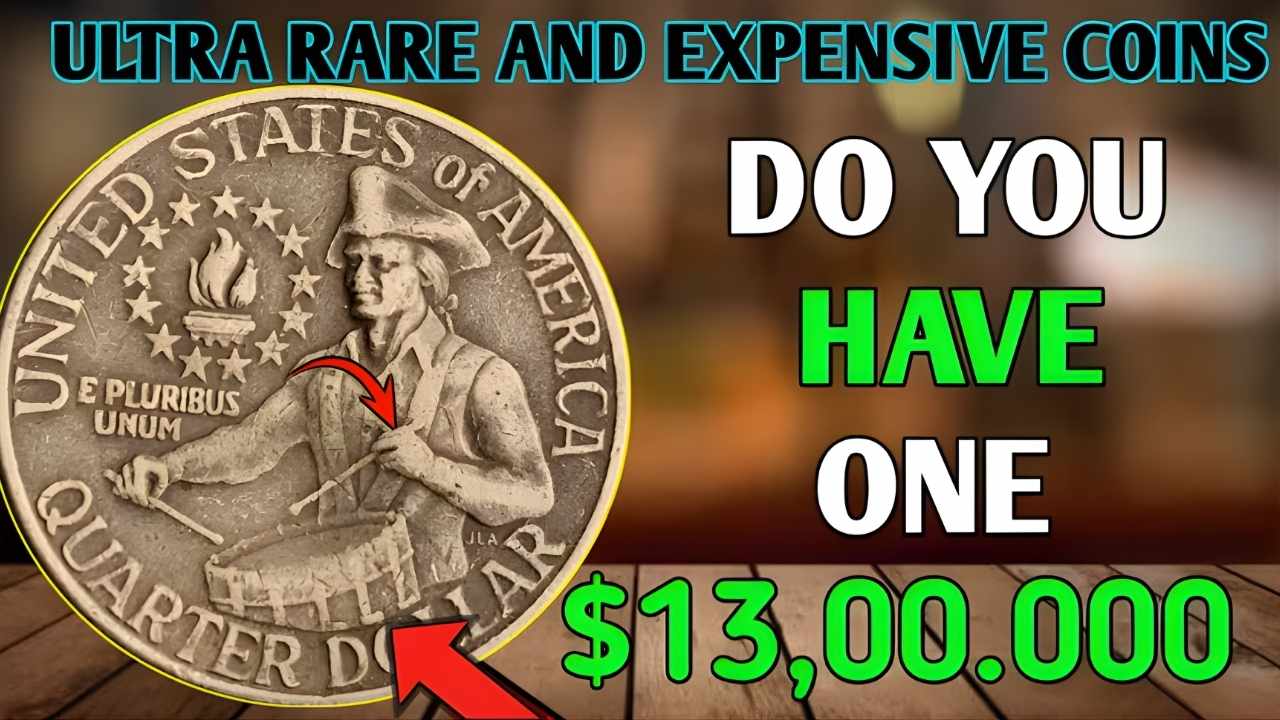
1776–1976 Bicentennial Quarter Value 2026: The 1776–1976 Bicentennial Quarter is one of the most iconic coins in U.S. history, commemorating the 200th anniversary of the signing of the Declaration of Independence. Released in 1976, this quarter features a unique reverse design to honor the nation’s founding, making it a collector’s favorite. While the coin was produced in large quantities, certain variations, including rare minting errors and silver issues, have made specific Bicentennial Quarters highly valuable in today’s market.
In 2026, nearly 50 years after its release, the Bicentennial Quarter remains a sought-after piece in the world of numismatics. Whether you’re a seasoned collector or a beginner, knowing the history, rare errors, and silver issues associated with this coin is essential for understanding its value and appreciating its significance.
In this article, we will explore the history behind the 1776–1976 Bicentennial Quarter, how to identify rare errors, and discuss the valuable silver issues that continue to capture the attention of collectors today.
Key Highlights
- The 1776–1976 Bicentennial Quarter is one of the most widely collected U.S. coins, with significant historical value.
- Rare minting errors, silver issues, and certain high-grade examples have made these coins valuable on the market.
- In 2026, the value of these quarters continues to rise, especially for coins with notable errors or rare characteristics.
Now let’s explore the details behind the Bicentennial Quarter’s history and its current value in 2026.
1. History of the 1776–1976 Bicentennial Quarter
The 1776–1976 Bicentennial Quarter was released as part of a series of commemorative coins celebrating the United States’ 200th anniversary. Designed by Jack L. Ahr, the quarter features a reverse design with a drummer boy, symbolizing the spirit of the American Revolution, along with the dates “1776” and “1976” inscribed on it. The obverse retains the traditional George Washington design, first created by John Flanagan in 1932.
Key Features:
- Commemorates the 200th anniversary of the Declaration of Independence
- Reverse design features a drummer boy with “1776-1976” inscribed
- Traditional George Washington obverse design, unchanged from the original
This coin was produced in large numbers, but its historical significance and unique design made it a favorite among collectors from the start. Over the years, it has become one of the most recognizable and enduring symbols of America’s independence.
2. Bicentennial Quarter Silver Issues (Worth Up to $10,000)
While most of the Bicentennial Quarters were minted in copper-nickel, a special edition was produced in 40% silver as part of the U.S. Mint’s commemorative coin series. These silver issues were sold to collectors and have become highly valuable due to their silver content and limited mintage.
The silver version of the Bicentennial Quarter was part of a larger series that included a silver dollar and half dollar. Collectors are particularly interested in the silver Bicentennial Quarters, as they are rarer than the copper-nickel versions and hold more intrinsic value due to their silver composition.
Key Features:
- 40% silver content, compared to the standard copper-nickel version
- Produced in limited quantities for special sets sold to collectors
- Can be worth up to $10,000 for proof or high-quality specimens
In 2026, the silver Bicentennial Quarter remains a sought-after piece for collectors who value both its historical significance and the value of silver.
3. Rare Errors and Varieties (Worth Thousands)
As with many coins, the Bicentennial Quarter has a few notable minting errors and varieties that have increased its value. These rare errors can include doubled dies, mis-strikes, and other anomalies that make the coin stand out from the typical production.
Some of the most notable rare error coins include:
Doubled Die Obverse Error (Worth Up to $3,000)
The 1776–1976 Bicentennial Quarter has been known to exhibit a doubled die obverse, where the inscription “LIBERTY” and the date “1976” show visible doubling. This minting error makes the coin especially valuable, with some specimens worth as much as $3,000 in perfect condition.
Mis-struck Coins (Worth Up to $5,000)
Coins that have been mis-struck, such as those with off-center designs, are considered rare. These mis-struck Bicentennial Quarters can command significant premiums at auction, with prices reaching up to $5,000 for coins in mint condition.
Clipped Planchet Error (Worth Up to $2,500)
Some Bicentennial Quarters were struck with clipped planchets, causing a portion of the coin to be missing. These errors are much rarer than typical minting defects and are highly sought after by advanced collectors, with values reaching up to $2,500.
Key Features:

- Doubled die errors with visible doubling on “LIBERTY” and “1976”
- Mis-struck or off-center coins can be worth thousands
- Clipped planchet errors are particularly rare and valuable
If you happen to find a Bicentennial Quarter with any of these errors, it could be worth a substantial amount more than its face value.
4. Bicentennial Quarter Value in 2026: What Collectors are Paying Today
The value of the 1776–1976 Bicentennial Quarter has continued to appreciate over the years. In 2026, the value of these quarters is influenced by factors such as their condition, whether they are silver issues, and whether they feature any rare minting errors.
Standard Copper-Nickel Bicentennial Quarter Value (Worth Up to $50 in MS-65 Condition)
While most Bicentennial Quarters are worth only their face value, coins in MS-65 or higher grades (Mint State 65) can fetch significant premiums. These high-quality coins, which exhibit little to no wear and have sharp, well-defined features, can be worth up to $50 or more, depending on demand and market conditions.
Silver Bicentennial Quarter Value (Worth Up to $10,000)
The 40% silver Bicentennial Quarter remains one of the most valuable versions of the coin, with some examples worth up to $10,000 for proof-like specimens in pristine condition.

Error Coins (Worth Thousands)
As mentioned earlier, error coins such as doubled dies, mis-strikes, and clipped planchets can be worth thousands. Depending on the error and the coin’s condition, collectors are paying between $500 and $5,000 or more for these rarities.
Key Features:
- Standard copper-nickel coins in MS-65 or better can be worth up to $50
- Silver issues can fetch as much as $10,000
- Rare minting errors can command thousands at auction
The 1776–1976 Bicentennial Quarter market continues to grow, with collectors willing to pay top dollar for well-preserved specimens and rare varieties.
5. How to Identify Valuable Bicentennial Quarters
To determine if your Bicentennial Quarter is worth more than its face value, there are a few key features to look for:
Condition
The condition of the coin is one of the most important factors in determining its value. Coins with little to no wear, sharp details, and minimal blemishes are worth more. If your coin is in MS-65 or better condition, it could be worth significantly more than face value.
Mintmark
Make sure to check for the mintmark on the obverse of the coin. The standard Bicentennial Quarter was minted at the Philadelphia Mint (no mintmark), Denver Mint (D), and San Francisco Mint (S). However, the silver issues were only produced at the Philadelphia Mint and San Francisco Mint.
Errors and Varieties
Check your coin for any minting errors or variations, such as doubled dies, mis-strikes, or off-center designs. These coins are much rarer and can be worth thousands depending on the type of error.
Key Features:
- Inspect for MS-65 or better condition for higher value
- Look for mintmarks to determine the coin’s origin
- Examine the coin for errors, such as doubled dies or mis-strikes
If you think you have a rare Bicentennial Quarter, it’s worth getting it appraised by a professional to determine its true value.
Conclusion
The 1776–1976 Bicentennial Quarter remains one of the most important and iconic coins in U.S. history. Whether you have a standard copper-nickel quarter, a 40% silver issue, or a rare error coin, these quarters continue to hold significant value in 2026. From historical design to minting anomalies, the Bicentennial Quarter offers a variety of rare finds for collectors, making it a must-have in any collection.
With the right knowledge and attention to detail, you can identify a valuable 1776–1976 Bicentennial Quarter and potentially earn a substantial return. Whether you’re just starting your collection or looking to expand your holdings, this coin represents both a piece of history and an opportunity for serious profit in today’s numismatic market.